parable.school
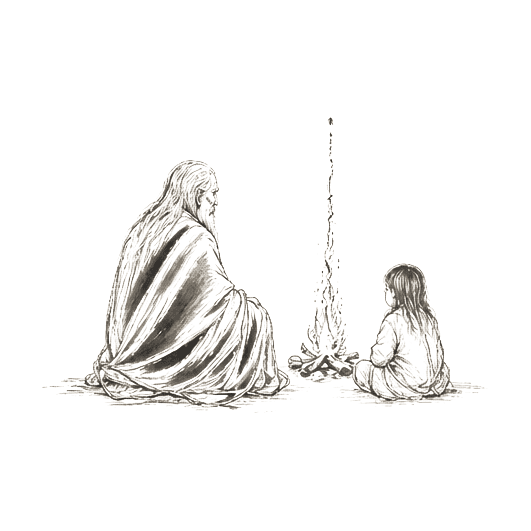
Sumi-e ink brushwork of an old robed figure and a small child seated side by side facing a small fire, alone in empty space

A grandfather sat with his grandson by the fire. The grandfather looked at the flames a long time.
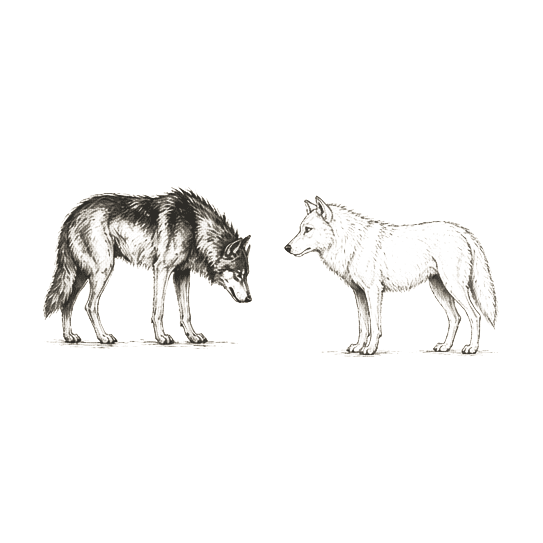
Sumi-e ink brushwork of one dark wolf and one light wolf facing each other in empty space, mirrored

“A fight is going on inside me,” he said. “Between two wolves.”
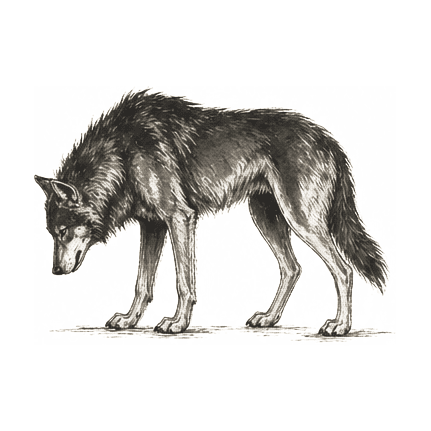
Sumi-e ink brushwork of a single wolf rendered in heavy dark ink, head lowered and shoulders tense, alone in empty space

“One is anger. Envy. Regret. Greed. Arrogance. Self-pity. Guilt. Resentment. False pride.”
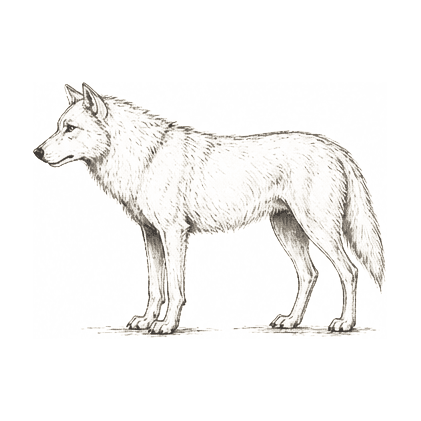
Sumi-e ink brushwork of a single wolf rendered in lighter softer strokes, standing in profile, alone in empty space

“The other is joy. Peace. Love. Hope. Humility. Kindness. Generosity. Truth. Compassion.”

“The same fight,” he said, “is going on inside you. Inside every person.”

·
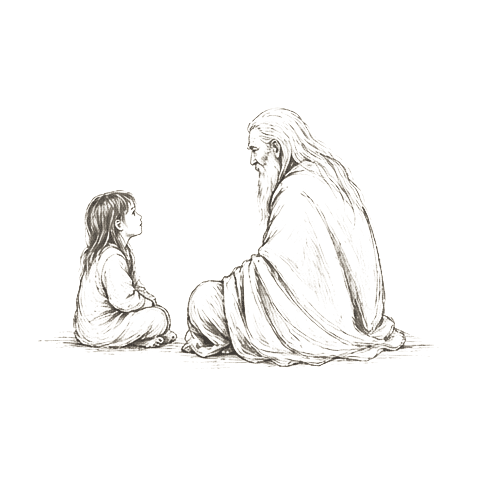
Sumi-e ink brushwork of a small child looking up at an old robed figure, both seated, alone in empty space

The boy thought. “Which wolf will win?”
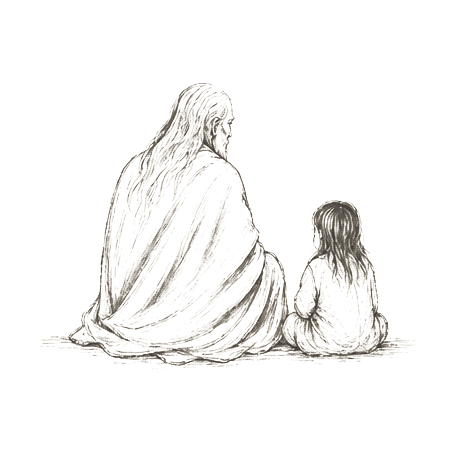
Sumi-e ink brushwork of an old robed figure and a small child seated together from behind, alone in empty space

“The one you feed.”

ᏩᏯ
wa-yawolf

lineage

The story is commonly framed as a Cherokee teaching from a grandfather to a grandson. Its written record is shallow and the Cherokee attribution is widely disputed. The earliest documented printed appearance is a “two dogs” version in The Daily Republican (Monongahela, PA) on November 16, 1962; Billy Graham retold it in 1978 as an Eskimo fisherman’s two dogs in The Holy Spirit; the Cherokee/wolves framing spread later in the twentieth century. Cherokee writers — including the Cherokee Nation’s own commentary — have largely rejected the attribution, noting that the tale does not appear in any recorded Cherokee corpus and that its feed-one-starve-the-other dualism sits awkwardly against Cherokee cosmological emphasis on balance.

What is clearer is the shape of the motif. A pair of opposed forces inside a single person, and a choice about which to nourish — this image is older than any single tradition. It surfaces in Christian, Buddhist, Zoroastrian, and Stoic writings. The wolves are an image the modern retelling settled on.

We have placed it here under the Cherokee attribution as it travels, while noting the uncertainty plainly. The Cherokee word for wolf, ᏩᏯ (wa-ya), is set as the closing mark — not as a claim about the story’s provenance, but as a small honor to the people the story names.

The teaching needs no anthropology. Two wolves live in you. The one you feed grows.