parable.school
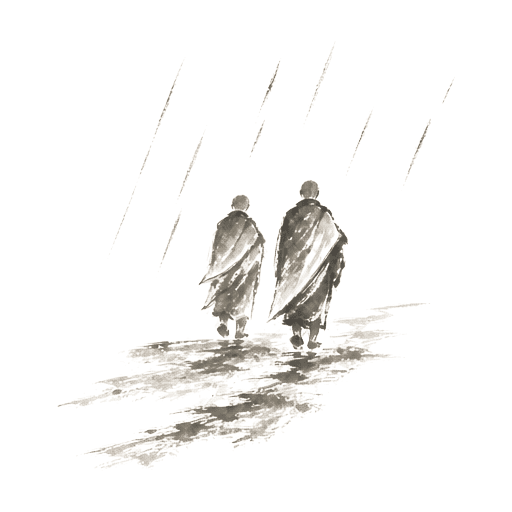
Sumi-e ink brushwork of two monks in simple robes walking together on a muddy road, rough strokes suggesting rain

Two monks, Tanzan and Ekido, were walking a muddy road in the rain.
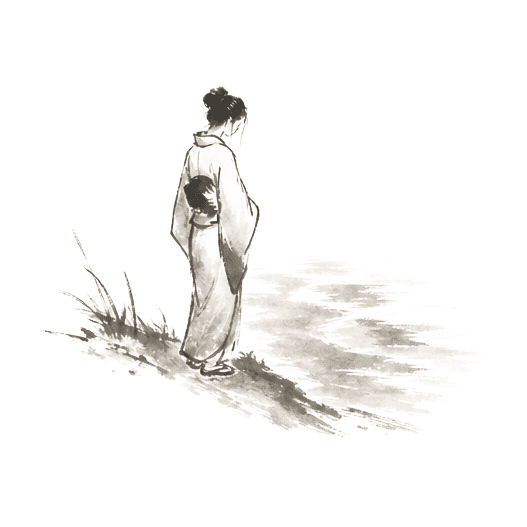
Sumi-e ink brushwork of a young woman in a simple kimono-like robe standing at the edge of shallow water, hesitating

At an intersection, where the rain had churned the road to deep mud, a lovely young woman in a fine silk kimono stood unable to cross.

Sumi-e ink brushwork of a monk holding a young woman in his arms while standing in shallow water and wet mud

Tanzan lifted her in his arms and carried her over the mud.
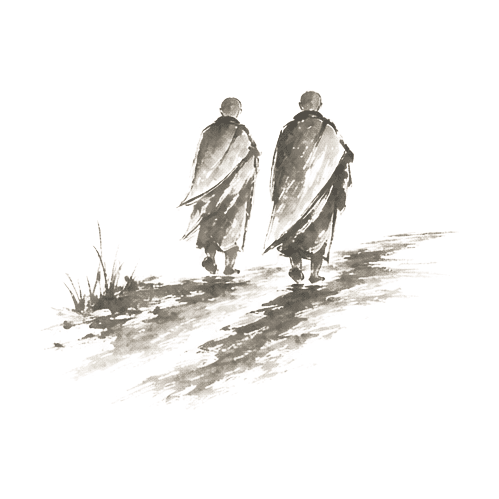
Sumi-e ink brushwork of the two monks walking side by side along a muddy road, the rain easing

The monks walked on in silence.

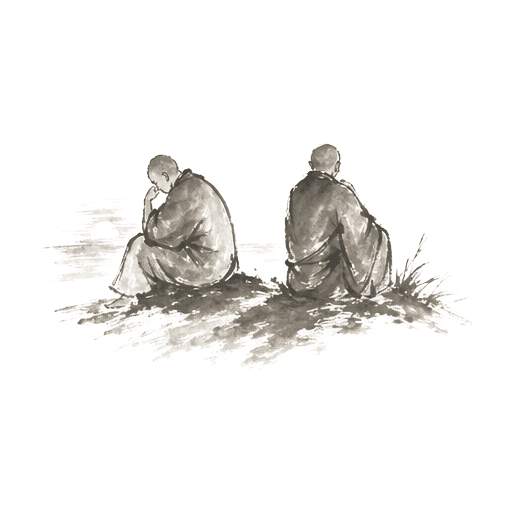
Sumi-e ink brushwork of the two monks resting in evening light, one pensive, the other calm

That evening, Ekido could no longer hold his peace.

“We monks don’t go near females,” said Ekido, “especially not young and lovely ones. It is dangerous. Why did you do that?”Tanzan looked at him a long moment.
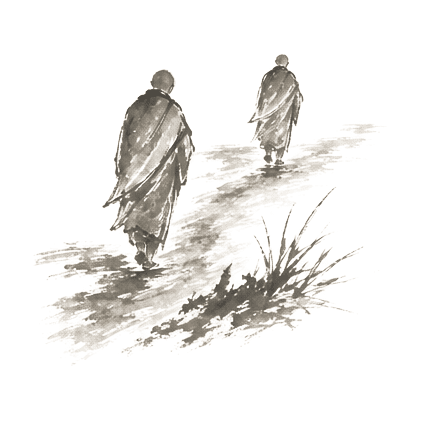
Sumi-e ink brushwork of two monks walking away along a muddy road, one slightly ahead and one behind, pale sky beyond

“I left the girl there. Are you still carrying her?”

放下
hōgeput down

lineage

Tanzan Hara (1819–1892) was a Sōtō Zen monk of the late Edo and Meiji periods; Ekido was his companion. In his lifetime Tanzan refused most monastic conventions: he ate meat, drank wine, and wrote his own death verse on the back of a postcard.

The anecdote entered English alongside Empty Your Cup through Paul Reps and Nyogen Senzaki’s Zen Flesh, Zen Bones (1957), and it is now one of the most-told Zen stories in the West.

The phrase 放下 (fàng xià, “put down”) names what Tanzan did and what Ekido could not. The teaching concerns how long we keep carrying something after the moment for it has passed.