parable.school
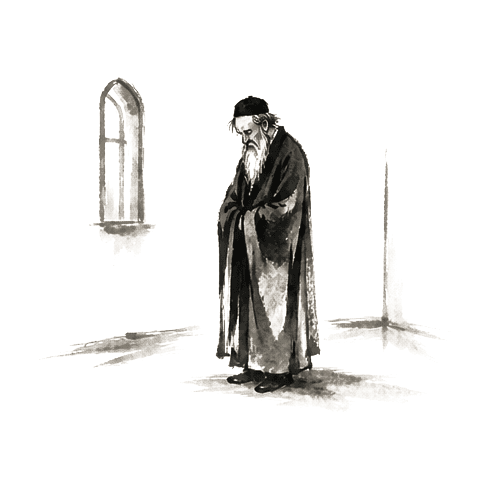
Sumi-e ink brushwork of a single old robed rabbi in worn clothes standing in a small bare room, alone in empty space

Reb Eisik, son of Yekel, lived in Krakow. He was poor and pious.
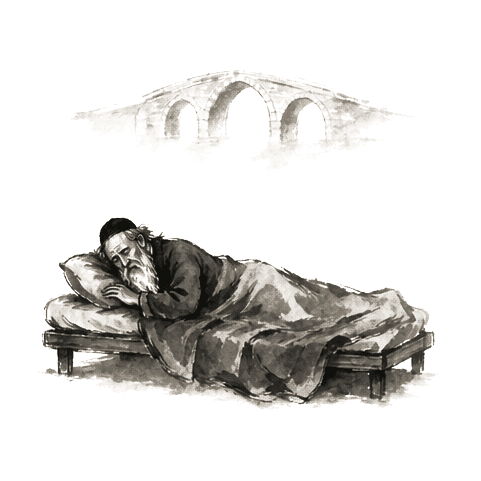
Sumi-e ink brushwork of a sleeping robed figure on a low bed, with the faint shape of a distant arched bridge floating in the empty space above

One night he dreamed of a treasure buried beneath the bridge that leads to the king’s palace in Prague.
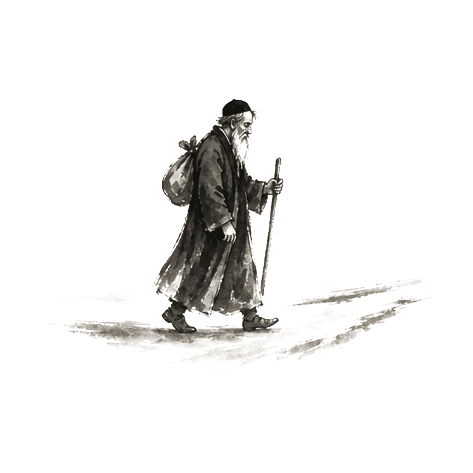
Sumi-e ink brushwork of a small robed figure walking with a wooden staff and a small bundle, alone on an empty road

He dismissed the dream. It came again. And a third time. He set out for Prague.
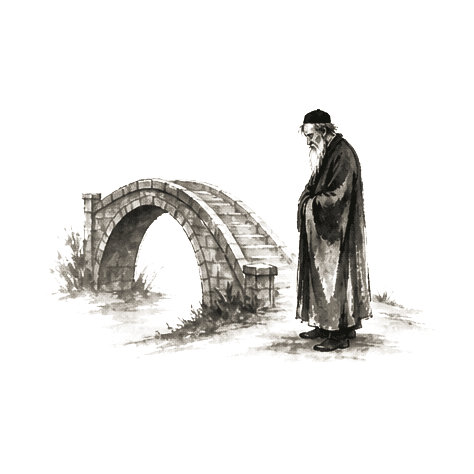
Sumi-e ink brushwork of a single robed figure standing at the foot of a small arched stone bridge, alone in empty space

The bridge was guarded day and night. He did not dare dig. He paced it from morning to evening, returning the next morning, and the next.
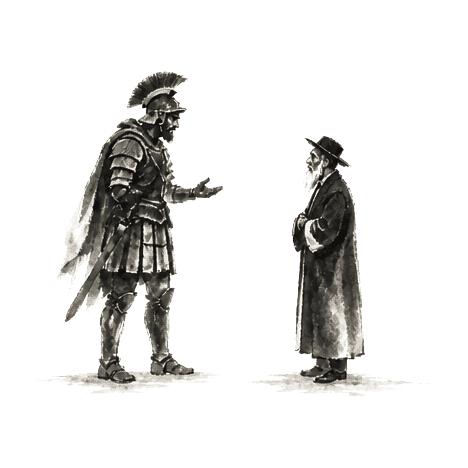
Sumi-e ink brushwork of an armored soldier and a small robed rabbi facing each other, the soldier gesturing in question, alone in empty space

The captain of the guard noticed him at last, and asked, with some kindness, what he was waiting for.
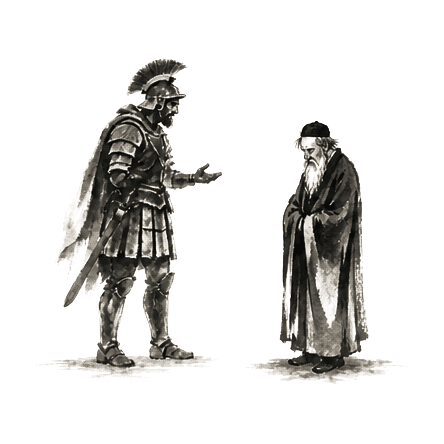
Sumi-e ink brushwork of an armored figure standing beside a small robed rabbi

With courtesy, Eisik told him the dream.
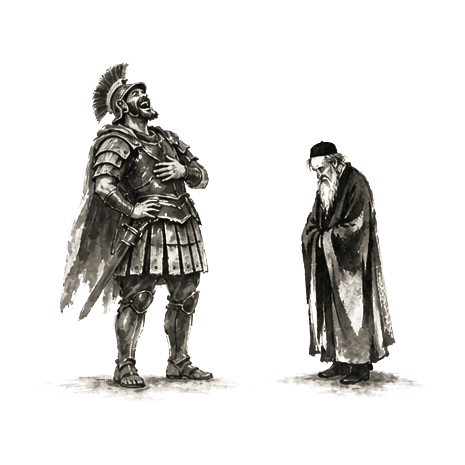
Sumi-e ink brushwork of an armored soldier with head thrown back in laughter, a small patient robed figure beside him

The captain laughed. “You wore out your shoes for a dream? Poor man.”“If I trusted dreams, I would have set out long ago. Just last night I dreamed I should go to Krakow, find a Jew named Isaac, son of Yekel, and dig beneath his stove. Imagine — half the Jews in Krakow are named Isaac, and the other half Yekel.”And he laughed again.
·
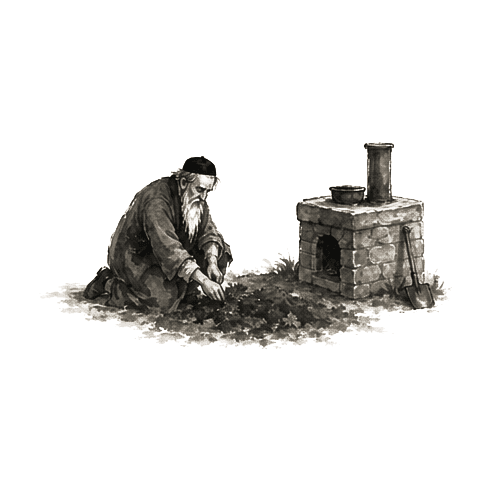
Sumi-e ink brushwork of a robed figure kneeling beside a small stone stove, hands in fresh-turned earth, alone in empty space

Eisik bowed. He thanked the captain. He went home. He dug beneath his own stove. The treasure was there.
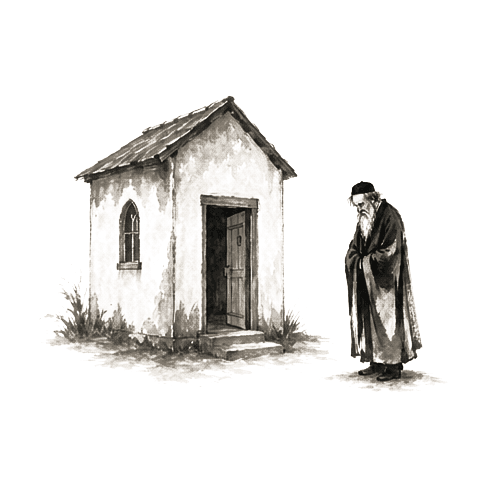
Sumi-e ink brushwork of a small humble prayer house with a lone small figure nearby

With it he built a House of Prayer.

אוצר
otzartreasure

lineage

The story is Hasidic, passed down in the courts and villages of eastern Europe through the eighteenth and nineteenth centuries. It is one of the most-loved teaching tales of the movement. The version that reached most readers is Martin Buber’s, included in The Way of Man According to the Teachings of Hasidism.

There is something you can find only in one place — but you have to travel far to learn that you could not have learned it without traveling.

After Buber.

Buber’s gloss is sharp. The treasure is at home, beneath your own stove. But you have to walk to Prague to learn it. The journey is not wasted — it is the only thing that lets the captain’s laugh land. Without the road, the stove is just a stove.

There are versions older than this one. The form is at least medieval; some folklorists trace it through Persian collections into European Jewish tellings. Hasidism took an old story and gave it a stove.

What is yours is at home. But the home you return to is not the home you left.