parable.school
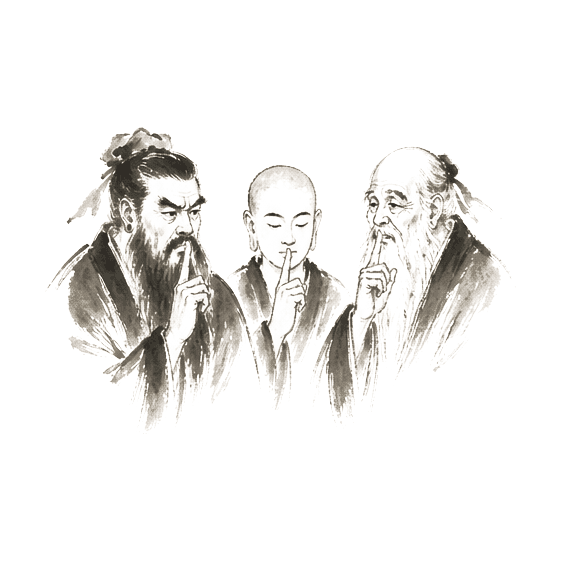
Sumi-e ink brushwork of three robed figures standing together, fingers raised near their mouths

Three sages stood before an open jar of vinegar.
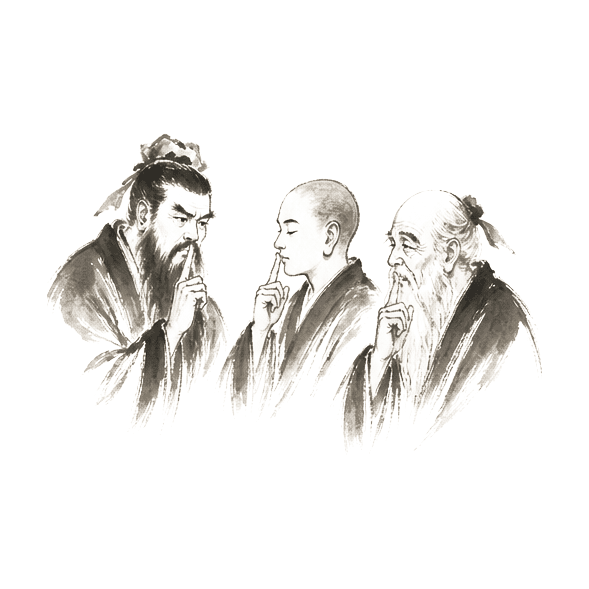
Sumi-e ink brushwork of three distinct robed figures with fingers raised near their mouths, gathered together

Each lifted a finger to his tongue and tasted.
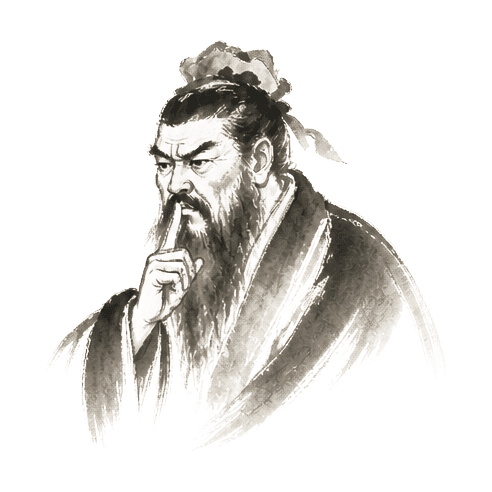
Sumi-e ink brushwork of a stern-faced bearded Confucian sage in formal robes, finger to his lips, eyes furrowed in disapproval

Confucius spoke first. “Sour. The world is out of order. We must correct it.”
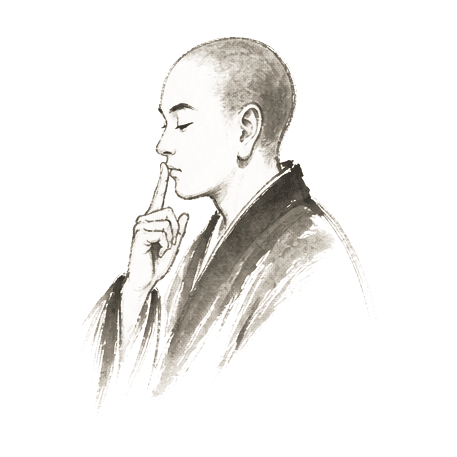
Sumi-e ink brushwork of a calm-faced monk in monastic robes with finger to his lips, neutral and impassive

The Buddha tasted next. “Bitter. The world is suffering. We must be free of it.”
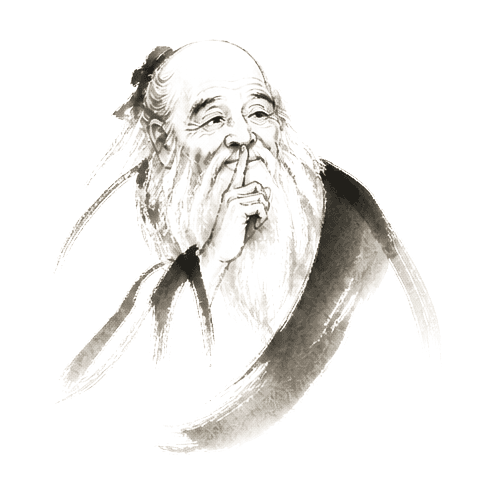
Sumi-e ink brushwork of an old Lao Tzu sage with long beard, finger to his lips, eyes calm in recognition

Lao Tzu tasted last. “Sweet. The world is as it is. We have only to live in it.”
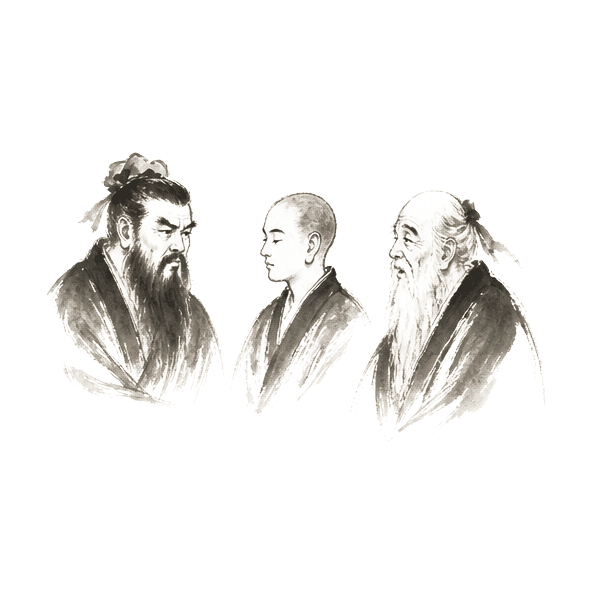
Sumi-e ink brushwork of three robed figures gathered together, facing one another

They turned and looked at one another. None of them was wrong. Each had tasted what he had come to taste.

三酸
sān suānthree sours

lineage

The Three Vinegar Tasters lives in painting more than in text: a single composition that East Asian painters have drawn and re-drawn for centuries. The idea of the Unity of the Three Creeds (三教合一) crystallizes in late-eleventh-century China; surviving canonical paintings come later, with the Kanō Motonobu hanging scroll (16th c.) often cited as the earliest extant example. A precursor — the “Three Laughs at Tiger Brook” featuring Tao Yuanming, Lu Xiujing, and Huiyuan — was reinterpreted into Confucius, the Buddha, and Lao Tzu around a jar.

Different schools have read the painting different ways. Daoist copies dominate, and they favor Lao Tzu’s answer: the vinegar tastes sweet to the one who does not insist it should taste otherwise. Read with a less partisan eye, the composition is an image of 三教皆同 (sān jiào jiē tóng, “the three teachings are one”), of how a single tongue at a single jar can produce three different worlds.

The vinegar is called the essence of life. The three answers are three ways of meeting it.