parable.school
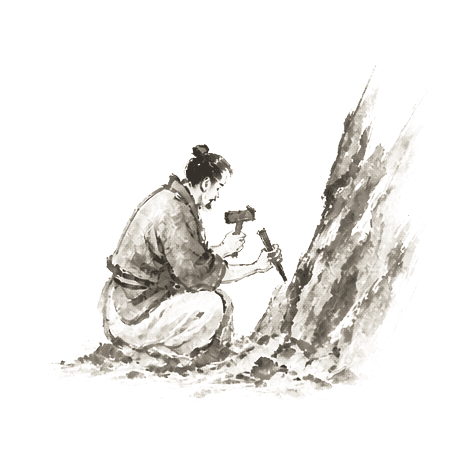
Sumi-e ink brushwork of a single figure with a stone chisel and small mallet, kneeling at a rock face, alone in empty space

A stonecutter labored in a quarry. He chipped stone all day. He was poor.
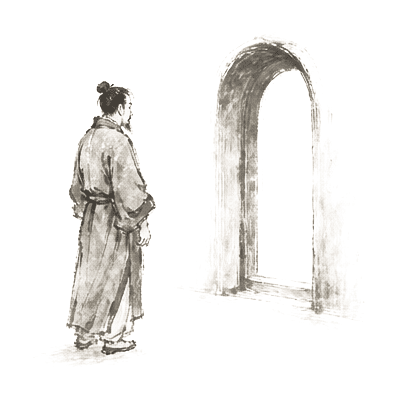
Sumi-e ink brushwork of a single man facing a tall arched entryway, alone in empty space

One day, passing the house of a wealthy merchant, he saw silk robes, fine furniture, attendants pouring tea.

“If only I were that merchant,” he said. “Such ease.”

A spirit passing on the wind heard him. “You shall be,” it said.
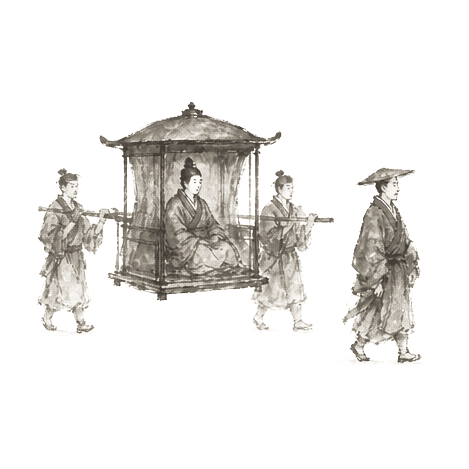
Sumi-e ink brushwork of a robed figure seated inside a covered palanquin with attendants, with another robed figure passing in a small procession

He became the merchant. He had silks, attendants, sweet wine. Then one day a prince’s procession passed before his gate — gold parasols, soldiers, drums.

“If only I were a prince.”“You shall be.”
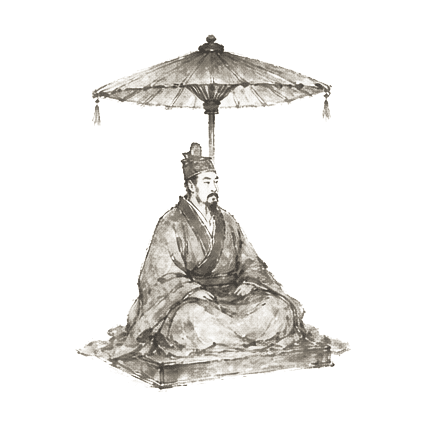
Sumi-e ink brushwork of a regal seated figure beneath a parasol

He became the prince. He rode beneath gold parasols. But the sun beat down through them, and even the prince could not turn it aside.

“If only I were the sun.”“You shall be.”

Sumi-e ink brushwork of a single gray cloud with lighter strokes around it, alone in empty space

He became the sun. He scorched the rice paddies, dried the rivers. But a cloud drifted before his face, and blocked his light.

“If only I were a cloud.”“You shall be.”

Sumi-e ink brushwork of a soft cloud-like form, alone in empty space

He became a cloud. He drenched the fields, swelled the rivers. But the wind came and drove him across the sky.

“If only I were the wind.”“You shall be.”
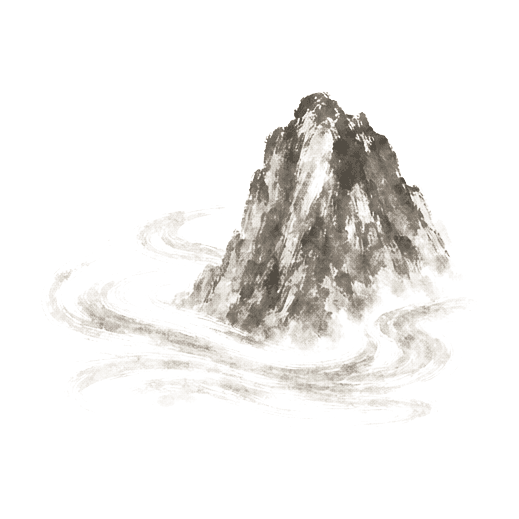
Sumi-e ink brushwork of a sweeping wind passing around the base of a great unmoved mountain, alone in empty space

He became the wind. He tore the roofs, stripped the trees, drove cloud and dust before him. But there was one thing he could not move: a great mountain.

“If only I were a mountain.”“You shall be.”

Sumi-e ink brushwork of a single tall mountain rendered in two or three confident brushstrokes, alone in empty space

He became the mountain. Vast. Motionless. Older than the wind, the cloud, the sun.
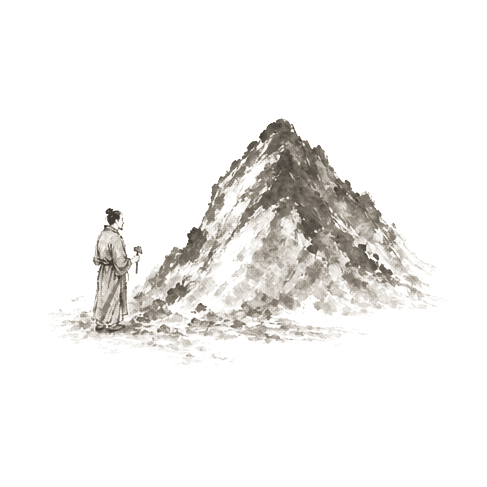
Sumi-e ink brushwork of a small mountain with a tiny figure at its base holding a tool

Then he heard a sound at his foot. Chip. Chip. Chip.
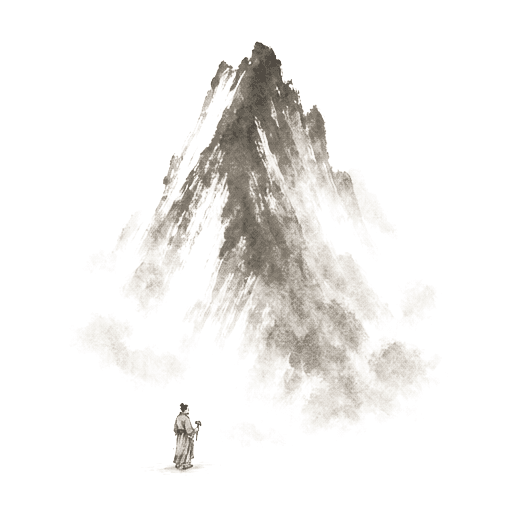
Sumi-e ink brushwork of the great peak of a mountain above a small stonecutter figure far below, dramatic vertical composition

He looked down. A stonecutter was working at his base.
·
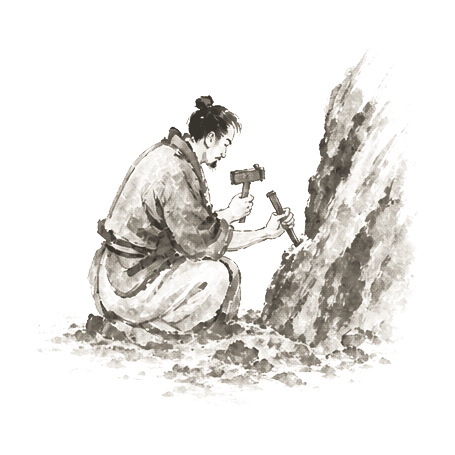
Sumi-e ink brushwork of a single figure with a chisel kneeling at a rock face, content, alone in empty space

He became a stonecutter again.

ishistone

lineage

The Stonecutter is widely attributed to Japanese folk tradition, though the transmission chain to English winds through Europe. Multatuli — the Dutch novelist Eduard Douwes Dekker — included a version in Max Havelaar (1860), attributing it to a Javanese narrator and reworking an earlier 1842 piece by W. R. van Hoëvell. David Brauns published the Japanese version in his Japanische Märchen und Sagen (1885), and Andrew Lang carried it into English in The Crimson Fairy Book (1903). Folklorists classify the tale ATU 555, kin to Grimm’s Fisherman and His Wife. Versions appear in Chinese and Korean folk collections as well.

元に戻る

“Returning to the origin.”

The chain of envy is the engine. Each wish lifts the stonecutter higher, and each new height shows him something higher still. The merchant fears the prince. The prince fears the sun. The sun fears the cloud. The cloud fears the wind. The wind fears the mountain. The mountain — vast, motionless, eternal — fears the small sound at its base.

When he hears the chipping, he discovers what he had been all along, when he had thought it was the smallest thing. The story is not nostalgic about poverty. It is honest about envy. There is no top of the chain to rest on. The only resting point is the work itself, when you have stopped wanting to be other than what you are.

The chisel was always in his hand. He had been the answer to his own wish from the beginning.