parable.school
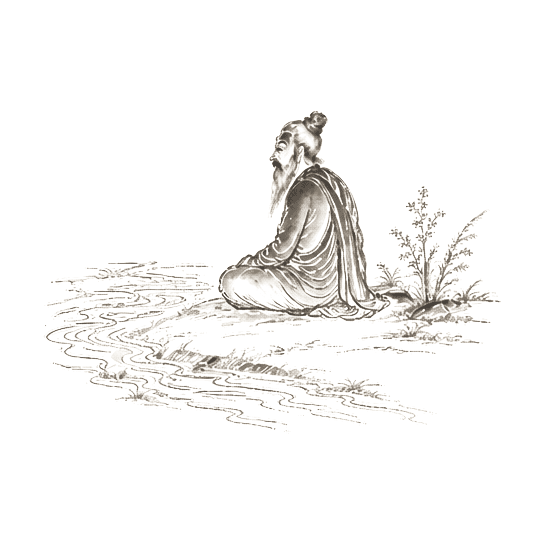
Sumi-e ink brushwork of a single robed sage seated cross-legged on a riverbank, watching flowing water, alone in empty space

A saint sat by the river, watching the water. He had been there many hours.

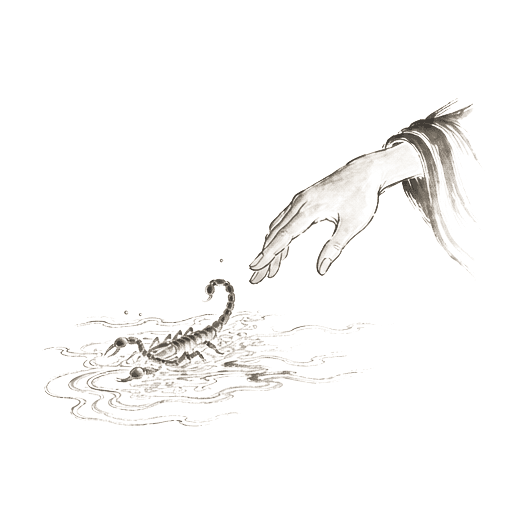
Sumi-e ink brushwork of a small scorpion in flowing water with visible ripples, alone in empty space

A scorpion fell into the current. It struggled, half-submerged, turning.

Sumi-e ink brushwork of an open hand partly in rippling water with a small scorpion on the palm, the rest of the figure implied

The saint reached in and lifted the scorpion onto his palm. The scorpion stung him.

Sumi-e ink brushwork of a hand reaching toward a small scorpion falling back toward water, droplets in the air

He dropped it. It fell back into the water. It began to drown again. He reached in and lifted it. It stung him.
Sumi-e ink brushwork of a hand reaching into rippling water toward a small struggling scorpion

He dropped it. He reached again. Again it stung him. Again.
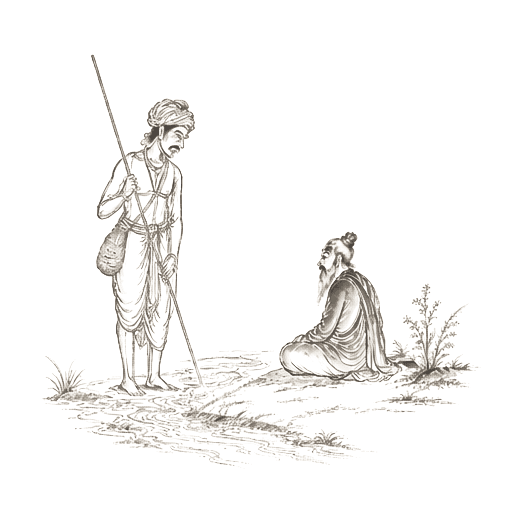
Sumi-e ink brushwork of a standing fisherman with a long pole, looking down at a seated sage by a river, alone in empty space

A fisherman passing on the bank stopped to watch.

“Holy one,” the fisherman called, “why do you keep lifting it? It only stings you.”
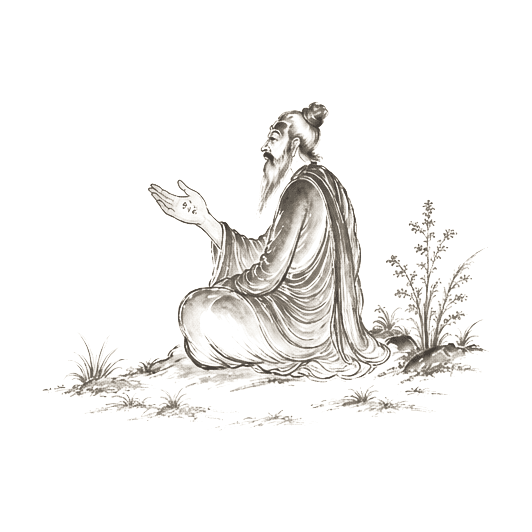
Sumi-e ink brushwork of a seated robed sage with one hand raised in calm explanation, his open palm bearing small marks, alone in empty space

“Its nature is to sting,” the saint said. “Mine is to save.”“Why should its nature change mine?”

·
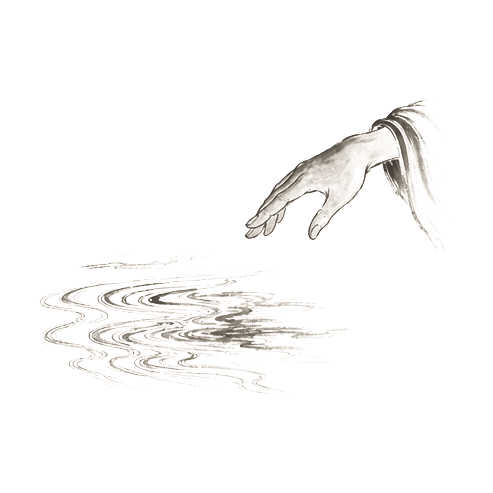
Sumi-e ink brushwork of a hand extended once more into rippling water

The saint reached again.

स्वभाव
svabhāvaone’s own nature

lineage

The parable is widely told across Indian devotional traditions, most often with the saint unnamed and the riverbank unspecified. Modern circulation owes much to twentieth-century Vedanta and Vaishnava retellings; the figure is sometimes identified as Sri Ramakrishna of Dakshineswar, though the attribution is hard to anchor in any single recorded discourse. The same shape of the story appears in Sufi and Jain tellings, with different riverbanks. Stories like this travel.

प्रकृतिं यान्ति भूतानि

“Beings follow their own nature.” — Bhagavad Gītā 3.33, often invoked alongside the parable.

The Sanskrit svabhāva — sva, “own,” and bhāva, “nature, being” — names what a thing is when it is being most itself. The scorpion’s svabhāva is to sting. The saint’s svabhāva is to save. The parable is sharp on the distinction: the saint does not refuse the sting. He refuses to let the sting bend him.

Some modern retellings end with the saint using a leaf to scoop the scorpion safely — a practical compromise. Others let him keep his bare hands the whole time. The older versions tend to leave the question unresolved. The point of the parable is not to be stung. The point is not to stop reaching.

Compassion is not earned by its objects. It is what the compassionate one is.