parable.school
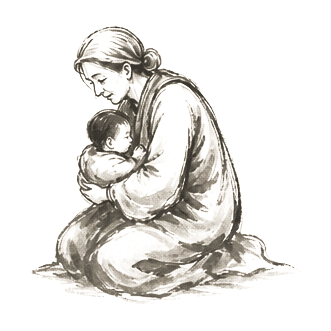
Sumi-e ink brushwork of a mother kneeling on the ground holding a small still child in her arms, head bowed toward the child, alone

Kisagotami’s child died in her arms.
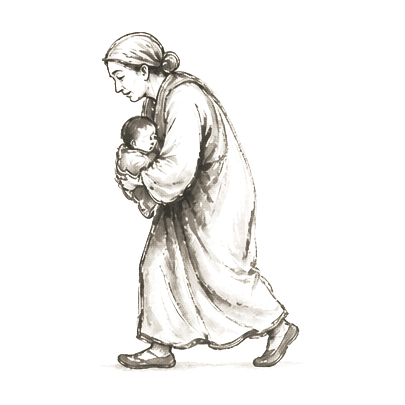
Sumi-e ink brushwork of a stooped woman walking, carrying a small bundled child in her arms, alone in empty space

She would not let him go. She walked from house to house, holding the small body, asking each neighbor for medicine.

Sumi-e ink brushwork of an old bearded man with one hand pointing toward a distant horizon, kindly expression

An old man said, “I have no medicine. But go to the Buddha.”
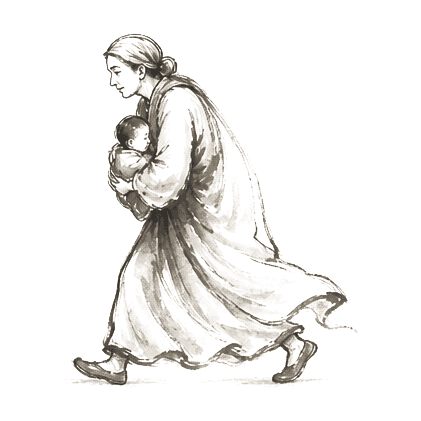
Sumi-e ink brushwork of a mother walking purposefully forward, still holding the small child in her arms, full of hope

Kisagotami went.

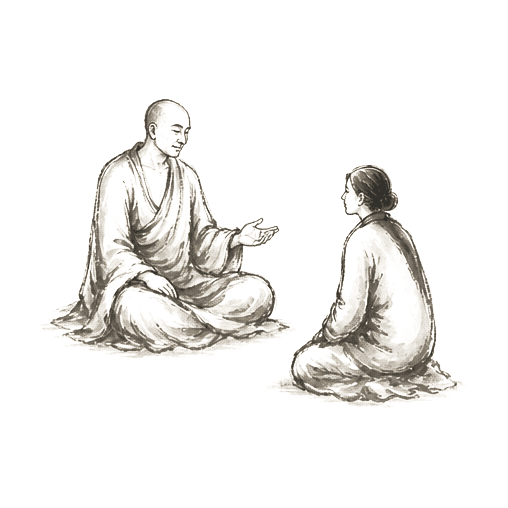
Sumi-e ink brushwork of a seated monastic teacher in simple robes, one hand open in a calm gesture toward a woman kneeling before him

“Bring me a mustard seed,” the Buddha said. “A small one — from a house in which no one has died.”Kisagotami went out again, full of hope.
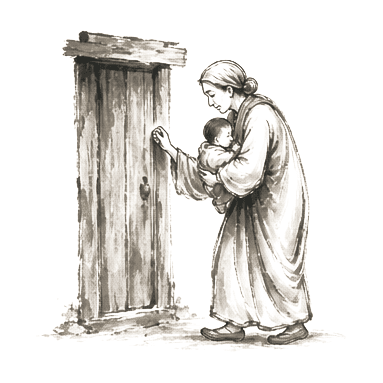
Sumi-e ink brushwork of a woman holding a bundled child, one hand raised toward a small wooden door

She knocked at the first door. “Has anyone in this house died?” “We have lost a son.”
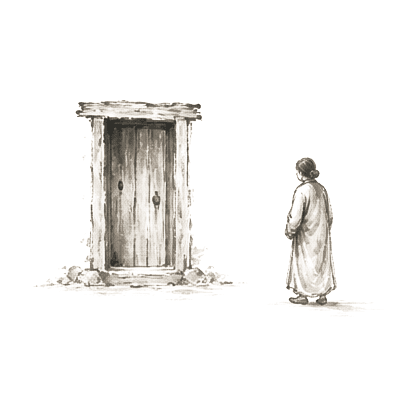
Sumi-e ink brushwork of a weathered doorway with a small human figure nearby, alone in empty space

She knocked at the second. “We have lost a mother.”
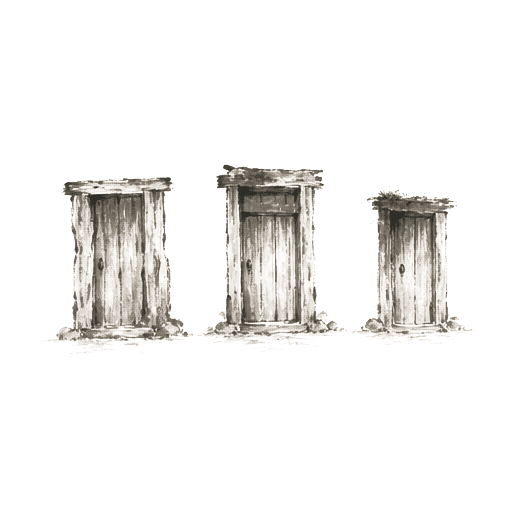
Sumi-e ink brushwork of three small wooden doors in a row, each slightly different in form and weathering, distantly arranged

She knocked at the third, the fourth, the tenth. Every house had its grief.
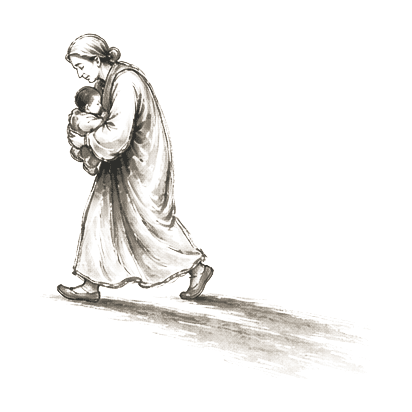
Sumi-e ink brushwork of the same mother walking in the long shadows of evening, still holding the child, exhausted

By evening she had walked the village. She had no seed.

·

Sumi-e ink brushwork of a small fresh mound of earth alone on a hillside, no figures, quiet

She buried her child. She returned to the Buddha. She did not need to say anything.

anicca
impermanence

lineage

The Therīgāthā (“Verses of the Senior Nuns”) preserves Kisagotami’s story; later commentaries to the Dhammapada retell it. She is one of the foremost women disciples of the Buddha, and the tradition names her the foremost in wearing coarse robes, a sign of how far she let go.

sabbe saṅkhārā aniccā

All formations are impermanent.

The Buddha’s instruction is a route. By the time Kisagotami has knocked on door after door, the truth meets her in each of her neighbors’ faces, as a fact carried in their grief.

The teaching is anicca, the impermanence of all conditioned things. The parable is one of the gentlest deliveries of it in the canon. Grief is shared, the parable says. It is the shape of being alive.