parable.school
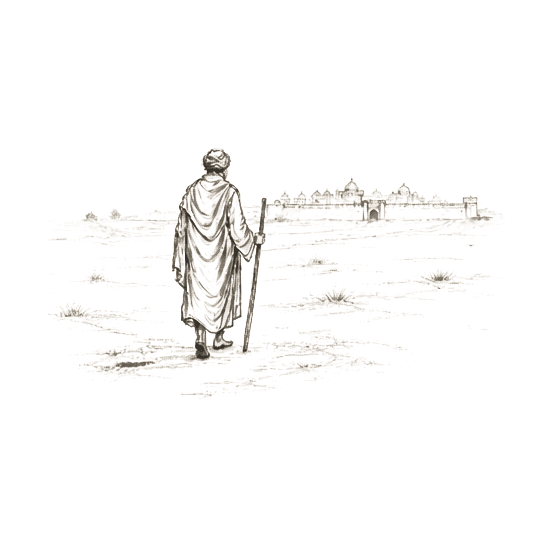
Sumi-e ink brushwork of a single robed figure walking with a wooden staff, approaching a distant city wall on the horizon, alone in empty space

Guru Nanak came to Multan. He had walked across the kingdom, teaching village by village.
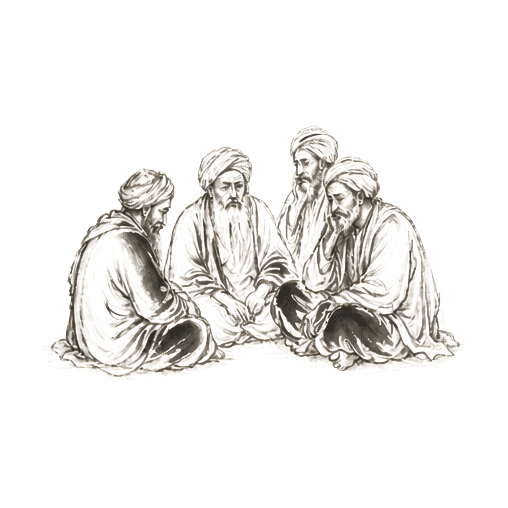
Sumi-e ink brushwork of a small group of three or four robed elders seated together, looking troubled, alone in empty space

The Sufi pirs of Multan — the city’s holy men, of Bahawal Haq’s lineage — heard he had come. They were uneasy. Multan, they felt, was already full of teachers.
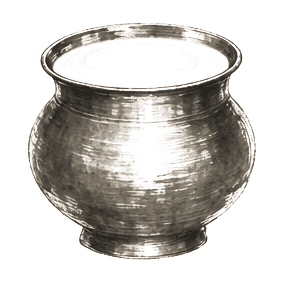
Sumi-e ink brushwork of a single brass vessel filled to the absolute brim with milk, alone in empty space

They sent a brass vessel out to meet him at the city gate. It was filled to the brim with milk. Not a word was spoken with it.

The message was plain: there is no room here for one more.
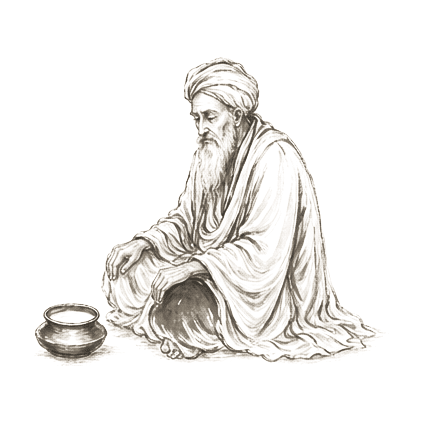
Sumi-e ink brushwork of a robed teacher seated before a small vessel of liquid, contemplative, alone in empty space

Guru Nanak looked at the milk a long moment.
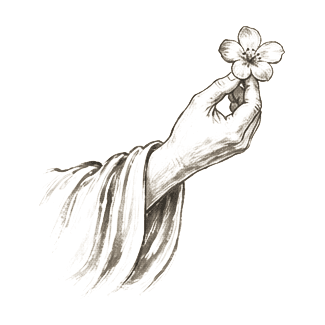
Sumi-e ink brushwork of a robed hand holding a single small five-petal blossom, alone in empty space

He took from his sleeve a single jasmine flower. He laid it gently on the surface of the milk.
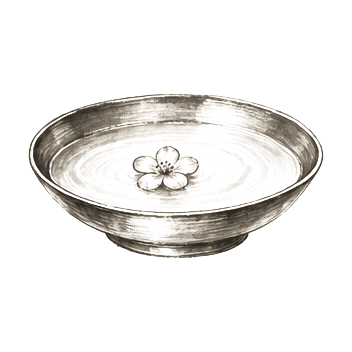
Sumi-e ink brushwork of a single small flower resting gently on the surface of liquid in a shallow bowl, alone in empty space

It floated. Not a drop was lost.

He sent the vessel back.

·
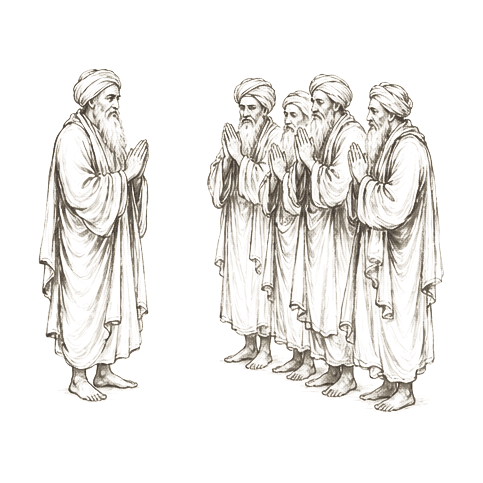
Sumi-e ink brushwork of a robed teacher and a small group of elders standing in mutual greeting with palms joined, alone in empty space

The pirs of Multan, when they saw the flower on the milk, understood. They went out to meet him.

ਚਮੇਲੀ
chamelijasmine

lineage

Guru Nanak Dev Ji (1469–1539), the first Guru of the Sikh tradition, traveled enormous distances in four great journeys called the udasis. He walked across the Punjab, into Sindh, through Afghanistan and Persia, to Mecca and Baghdad, into Tibet, and south to Sri Lanka — teaching as he went, refusing the categories of Hindu and Muslim that the world wanted him to fit inside.

ਨਾ ਕੋ ਹਿੰਦੂ ਨਾ ਮੁਸਲਮਾਨ

“There is no Hindu and no Muslim.” — Guru Nanak’s first public utterance, after returning from the river.

The Multan story is one of the most-loved sakhis in the broader Janamsakhi tradition — the life-stories of Guru Nanak collected and retold over centuries. Its textual provenance in the earliest written Janamsakhis (Puratan, Bala, Miharban) is debated by scholars, but the oral form is canonical in Sikh homes. The motif of the full vessel and the added flower also appears in Sufi and Hindu tellings, with different teachers at different gates.

The pirs sent a vessel of milk as a quiet challenge. The Guru’s answer was quieter still: a flower that floated without spilling a drop. He added without displacing. The bowl was no fuller, and yet it was changed.

It is the gentlest argument for humility I know. The brimming bowl says no more. The jasmine adds fragrance.