parable.school
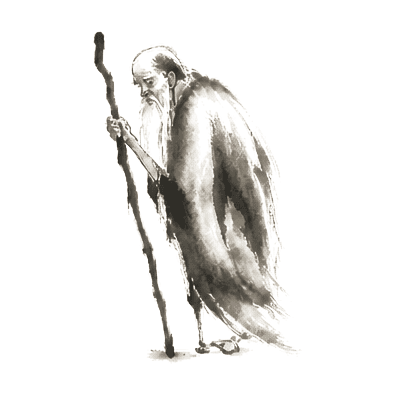
Sumi-e ink brushwork of an old stooped man with a long staff

There was once an old man who lived on the edge of the frontier.
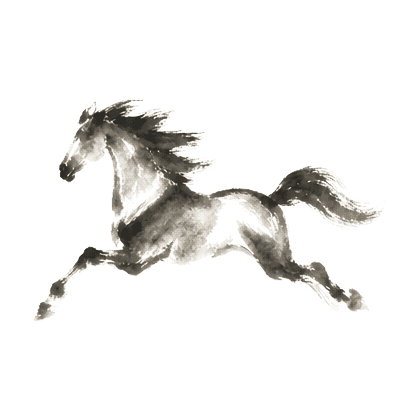
Sumi-e ink brushwork of a single horse mid-gallop

One day, his horse ran away.

“Such bad luck,” the neighbors said.“Maybe,” the old man replied.
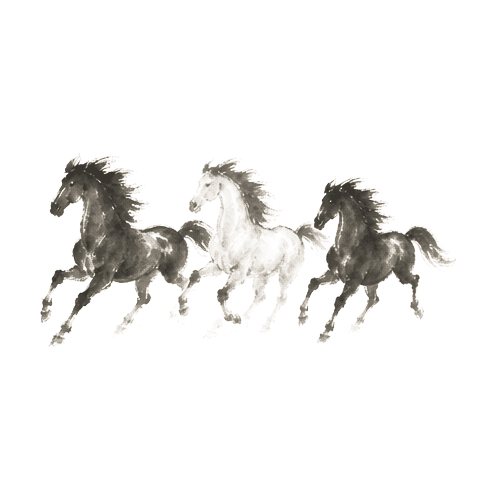
Sumi-e ink brushwork of two dark horses and one light horse moving together as a small herd

The next morning, the horse returned — bringing with it three wild horses.

“How wonderful,” the neighbors exclaimed.“Maybe,” said the old man.
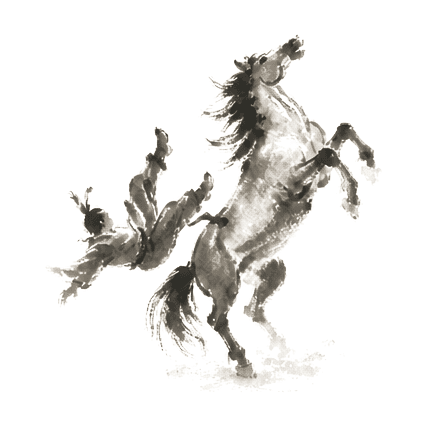
Sumi-e ink brushwork of a figure mid-fall from a rearing horse

The following day, his son tried to ride one of the wild horses. He was thrown, and broke his leg.

“What misfortune,” said the neighbors.“Maybe,” answered the old man.
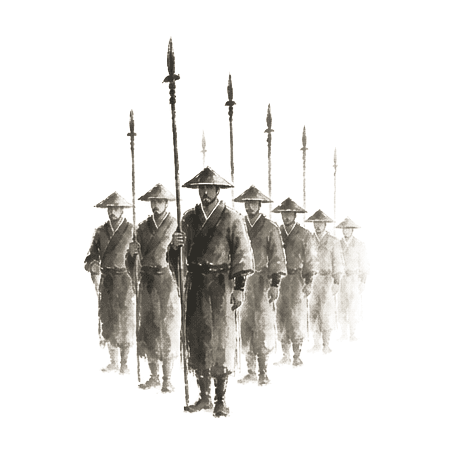
Sumi-e ink brushwork of a column of military officials with conical hats and tall spears

The day after, military officials came to draft young men into the army. Seeing the son’s broken leg, they passed him by.

“How fortunate,” the neighbors said.“Maybe,” said the old man.

未必
wèi bìnot necessarily

lineage

The parable is older than its English retellings. Its conceptual root is chapter 58 of the Daodejing:

禍兮福之所倚,福兮禍之所伏。

Misfortune is what fortune leans on; fortune is what misfortune hides within.

The earliest extant narrative form appears in chapter 18 (人間訓) of the Huainanzi, a Han-dynasty compendium presented at court around 139 BCE. In that text the protagonist is “a man near the frontier skilled in techniques” (近塞上之人有善術者), and the speaker of each reversal is his father. The refrain in that version echoes the Daodejing’s predictive form: how could this not be a blessing? The English “maybe” is later.

In Chinese the anecdote was later compressed into the proverb 塞翁失馬 (“the old man of the frontier lost his horse”), often expanded as 塞翁失馬,安知非福. The proverb is later than the Huainanzi text itself.

The “Chinese farmer” who answers “maybe” is a 20th-century English retelling, most associated with Alan Watts. This page sits in that lineage, looser than the Han original, with one step back toward the source: an old man near the frontier rather than a farmer, echoing 塞翁.