parable.school
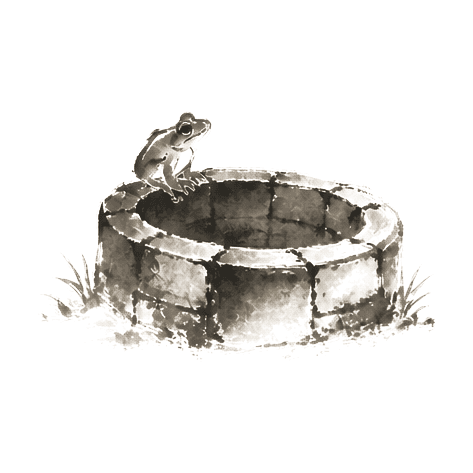
Sumi-e ink brushwork of a small frog at the lip of a circular stone well, peering out

A frog lived in an old well.
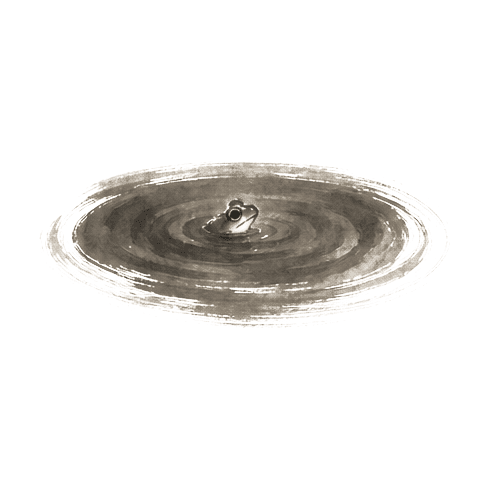
Sumi-e ink brushwork of a small frog resting at the center of a round dark pool, head above the surface with gentle ripples spreading outward

He was master of his small water. He could rest on a ledge. He could drift in the green.
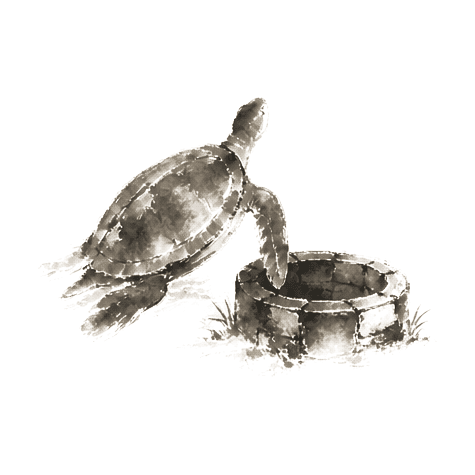
Sumi-e ink brushwork of a sea turtle beside a small round stone well, one flipper near the rim

One day a turtle from the great eastern sea passed by. The frog leaned out from the lip of his well.

“Come down. Look. Is it not wonderful here?”The turtle put one foot toward the well. His knee caught at the rim. He drew back.
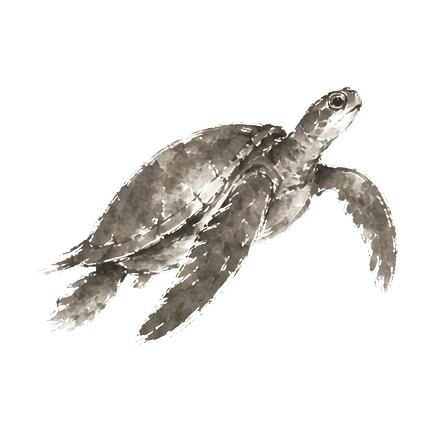
Sumi-e ink brushwork of a great sea turtle alone, suspended in open empty space with flippers outstretched

“I have seen the sea,” the turtle said. “A thousand li cannot measure its breadth. A thousand fathoms cannot measure its depth. In Yu’s time, nine floods out of ten years, and yet the sea did not rise. In Tang’s time, seven droughts out of eight, and yet the sea did not recede. It is not changed by time. That is my home.”
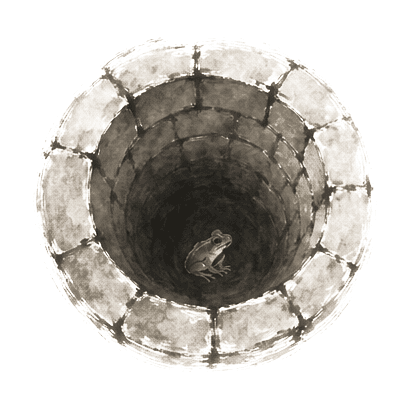
Sumi-e ink brushwork of a single small frog withdrawn at the bottom of a deep stone well, just a curled silent shape in shadow

The frog shrank into himself, and was silent.

井蛙
jǐng wāthe well-frog

lineage

Chapter 17 of the Zhuangzi, 秋水 (Qiū Shuǐ, “Autumn Floods”), tells the story. The chapter is a long dialogue about scale: how large or small a thing is depending on what stands beside it.

井蛙不可以語於海者,拘於虛也。

You cannot speak of the sea to a frog in a well — he is bound by the space he lives in.

The parable concerns the limits of any single vantage point: what looks like the whole world from one place is a corner of it from another.

The phrase 井底之蛙 (jǐng dǐ zhī wā, “the frog at the bottom of the well”) became a Chinese idiom for narrow-mindedness, but the Zhuangzi’s use is softer: every creature is, to some degree, in its own well.