
A man was rowing alone across a wide river.
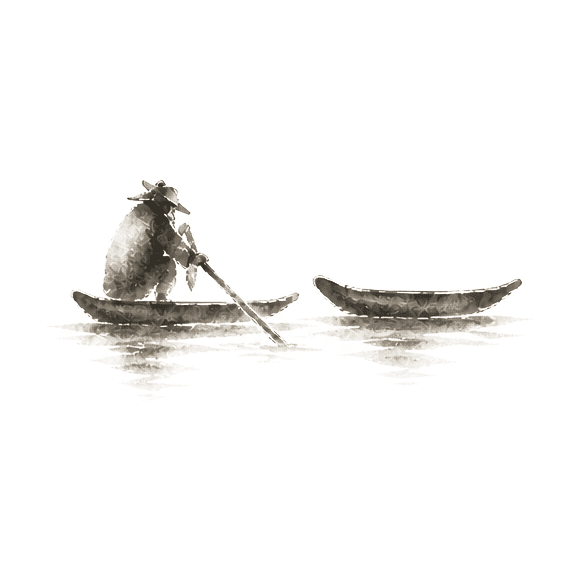
Another boat drifted into his.

He turned, ready to shout at whoever had let his boat slip.
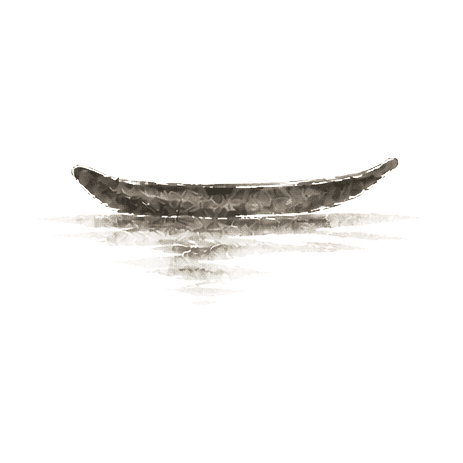
But the other boat was empty.
〇

His anger had nowhere to land. He rowed on.
A man was rowing alone across a wide river.
Another boat drifted into his.
He turned, ready to shout at whoever had let his boat slip.
But the other boat was empty.
His anger had nowhere to land. He rowed on.
The parable appears in chapter 20 (山木, “Mountain Tree”) of the Zhuangzi, a foundational Daoist text compiled in the 4th–3rd centuries BCE around the figure of Zhuangzi (莊子, Master Zhuang). The original passage continues past the boats: if you can empty your own boat as you cross the river of the world, the text says, no one will oppose you, no one will seek to harm you.
The figure of 虛舟 (xū zhōu, “empty boat”) became a stock image for a self that holds nothing for anger to grip. The world keeps bumping into us. What we project into the other boat is what we end up arguing with.
This page presents a short English retelling. The Zhuangzi original is denser and more digressive; the parable here keeps the structure (collision, the impulse to shout, the realization) and lets the rest fall away.