parable.school
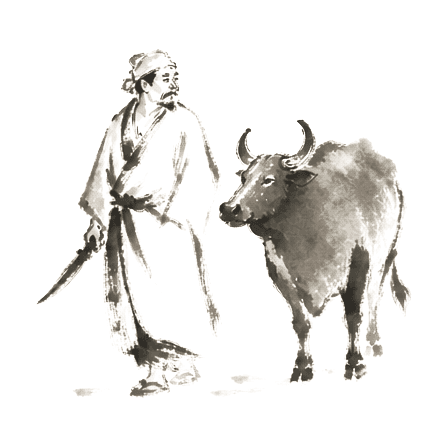
Sumi-e ink brushwork of a cook in a simple robe holding a slender blade in his hand, a large ox standing patiently beside him

Cook Ting was butchering an ox for Lord Wen-hui.
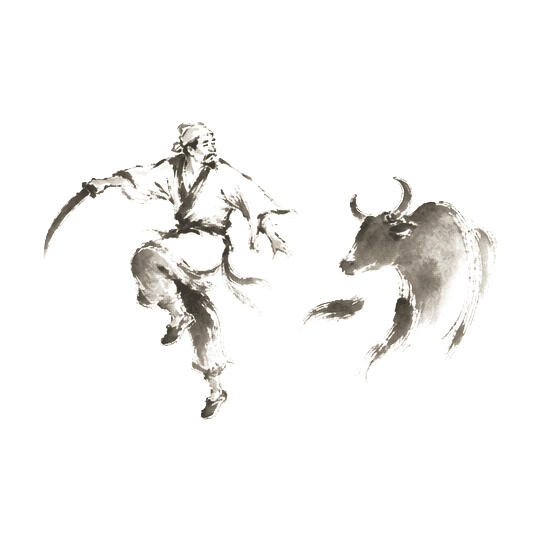
Sumi-e ink brushwork of a cook in mid-motion, body in a fluid dance — one leg lifted, shoulder leaning, blade extended; the ox suggested in a few strokes

His hand cut. His shoulder leaned. His foot stepped. His knee pressed. His blade sang.

“Excellent,” said the lord. “How can your skill be so great?”Cook Ting laid down his blade.

Sumi-e ink brushwork of the cook holding a long knife horizontally at chest height

“I no longer look with my eyes. I do not force. I follow what is already there — the openings between the joints — and let the blade pass through them.”
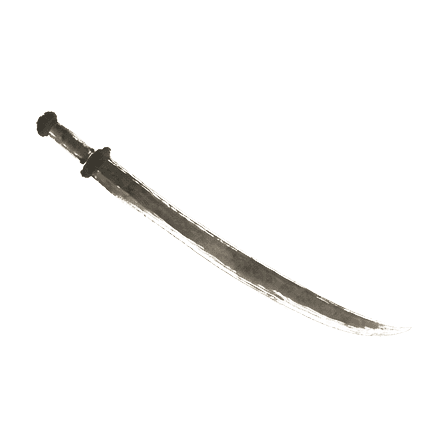
Sumi-e ink brushwork of a single long curved blade alone in empty space, edge gleaming

“A good cook changes his knife once a year. A common cook, once a month. I have used this blade nineteen years, and it is still as sharp as the day it left the whetstone.”

“From a cook,” said the lord, “I have learned how to live.”Cook Ting bowed.

庖丁
páo dīngCook Ting

lineage

The story is the central anecdote of chapter 3 of the Zhuangzi, 養生主 (Yǎng Shēng Zhǔ, “The Secret of Caring for Life”). The chapter teaches that to live well is to act with the grain of things rather than against it.

始臣之解牛之時,所見無非牛者;三年之後,未嘗見全牛也。

When I first began to cut up oxen, all I saw was the ox itself. After three years, I no longer saw the whole ox at all.

Cook Ting is the archetype of 無為 (wú wéi, “effortless action”). He does not strike at the ox; he discovers the spaces the ox already has, and the blade enters them. His skill has refined so far that no one watching can call it skill: the work does itself through him.

The phrase 庖丁解牛 (páo dīng jiě niú, “Cook Ting cuts the ox”) became a Chinese idiom for mastery so complete that effort disappears.